Skip to content
You’ve just had your carpets professionally cleaned and they look outstanding. The question now is: how do you keep them that way for as long as possible?
This is one of the most common questions we hear from Melbourne homeowners after a clean. The answer is simpler — and more honest — than the carpet care industry sometimes suggests. Here’s exactly what works, what doesn’t, and why.
The Foundation: Understanding What Makes Carpets Get Dirty
Before we talk about protection, it helps to understand what actually damages and soils carpet in the first place.
The two main culprits are dry soil and surface contamination. Dry soil — grit, dust, and fine particles — works its way into carpet fibres and acts as an abrasive with every footstep. Over time this wears the fibres down and causes the dull, matted appearance that no amount of cleaning can fully reverse. Surface contamination — spills, oils, pet matter — bonds to fibres and attracts more soil if not addressed quickly.
Understanding this changes how you think about carpet protection. The goal isn’t to coat the fibres in something — it’s to keep contaminants out in the first place and remove them before they do damage.
Why We Don’t Recommend Scotchgard or Carpet Protectors
We’ll be upfront about this, because a lot of carpet cleaning companies offer fabric protection as an add-on and we choose not to.
Carpet protectors like Scotchgard work by coating the fibres with a water-repelling agent. In theory, liquids bead on the surface and give you a few extra seconds to blot them up before they penetrate. In practice, the coating rubs off relatively quickly — particularly in high-traffic areas — and needs to be reapplied regularly to remain effective. It’s also a meaningful additional cost.
More importantly, it gives some homeowners false confidence. A protector doesn’t stop soil from settling into the pile, doesn’t prevent wear, and doesn’t eliminate the need for regular professional cleaning.
Our honest recommendation: spend that money on more frequent professional cleaning instead. A carpet that’s cleaned every 6–9 months rather than once a year will look better, last longer, and have fewer permanent stains than one cleaned annually with a protector applied. Removing surface soil before it bonds to fibres is far more effective than trying to coat the fibres against it.
What Actually Works: Post-Clean Protection Habits
- Wait Until the Carpet Is Fully Dry
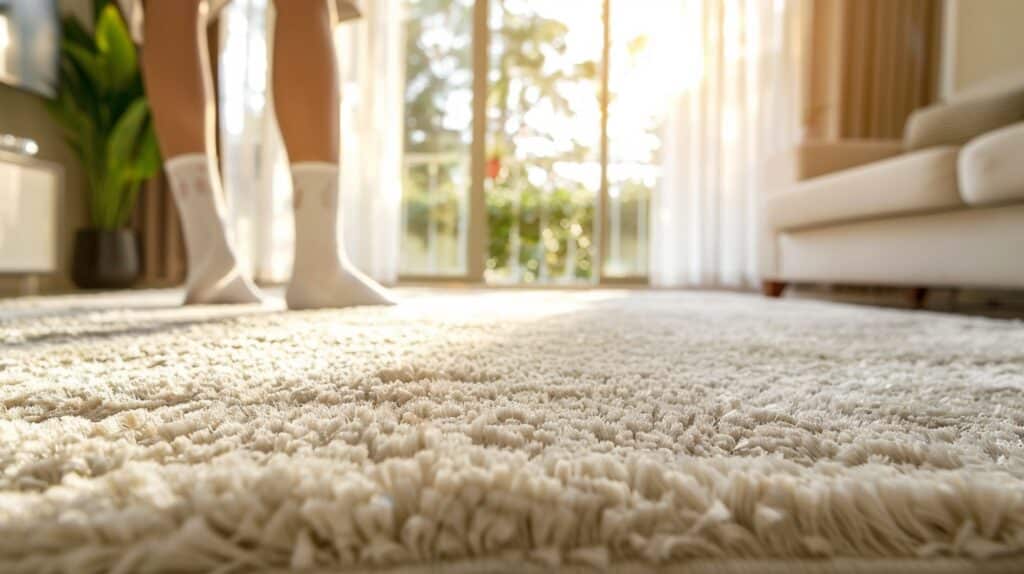
This is the single most important thing to do immediately after a professional clean. Walking on a damp carpet introduces soil from footwear and the floor surface, compresses the wet pile, and can cause permanent fibre distortion.
Wait a minimum of 2–4 hours before light foot traffic (in clean socks only). Aim for 6–8 hours where possible. Press your palm firmly into the pile — if it feels cool or slightly damp, wait longer. A fully dry carpet will feel neutral in temperature with no moisture transfer to your hand.
- Enforce a Shoes-Off Rule
This single habit has a greater impact on how long your carpet stays clean than almost anything else. Footwear carries organic matter, oils, bacteria, and grit from outside directly into the pile. Even a partial shoes-off policy — shoes off at the door, no outdoor shoes on carpet — makes a visible, measurable difference over time.
If you have guests who might be uncomfortable removing shoes, keep a basket of clean disposable shoe covers near the door. It sounds formal, but most people appreciate the consideration once they know a fresh professional clean has just been done.
- Use Quality Door Mats at Every Entry Point
A high-quality, deep-pile mat at every external door captures soil, grit, and moisture before it reaches the carpet. The key word is quality — a thin rubber mat does very little. A dense, scraping-style mat on the outside and an absorbent mat on the inside gives you two layers of defence.
Clean your mats regularly. A dirty mat stops capturing soil and starts redistributing it. Shake or vacuum mats weekly and wash them when they become noticeably dirty.
- Respond to Spills Immediately
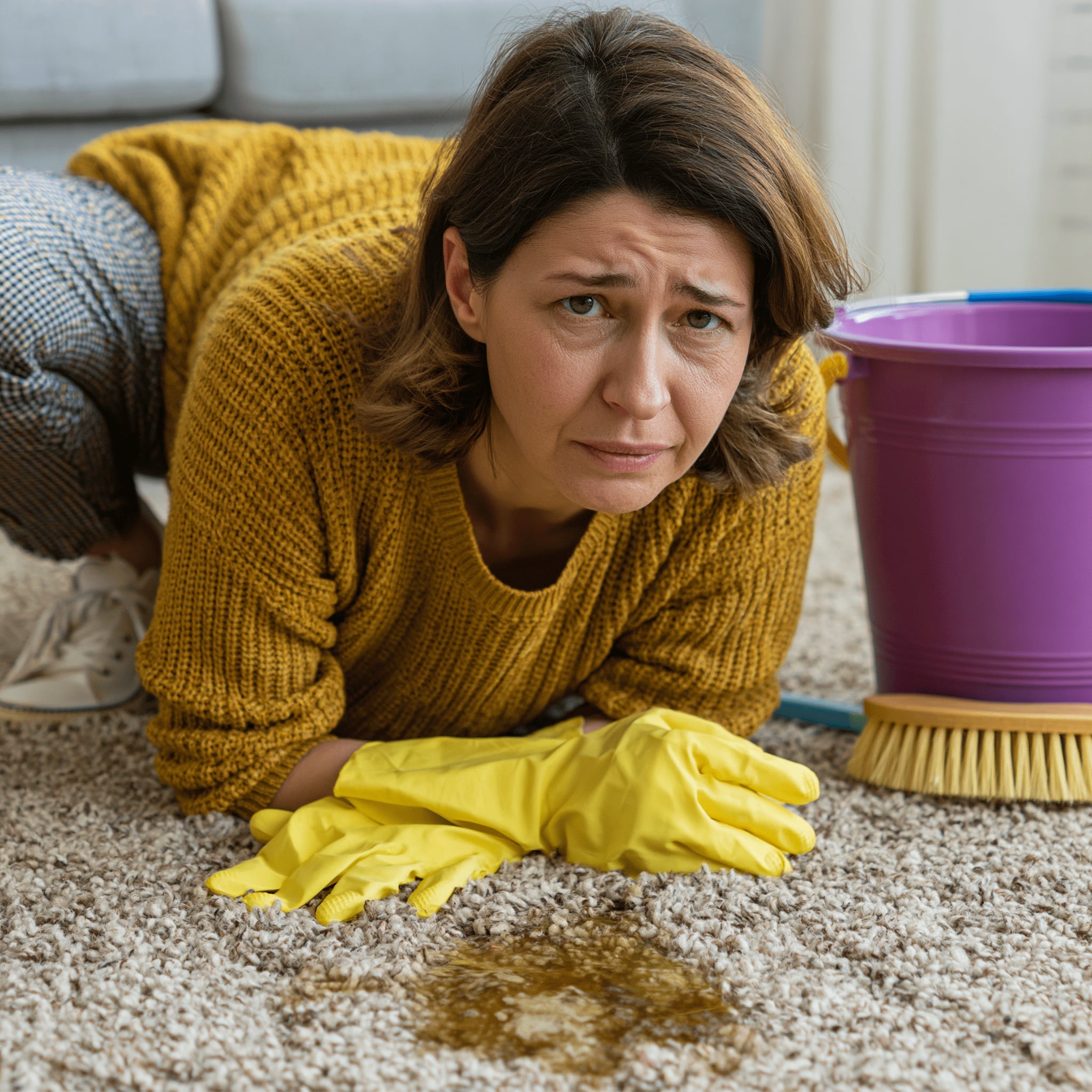
Fresh spills are dramatically easier to remove than dried ones. The difference between a 5-minute response and a 30-minute response can be the difference between no stain and a permanent mark.
Keep the following accessible at home:
- Clean, white absorbent cloths or thick paper towels
- A small spray bottle of cold water
- An enzyme-based spot cleaner for biological spills (pet accidents, food)
When a spill happens: blot from the outside edge inward — never rub. Blot, don’t scrub. Remove as much liquid as possible before applying any cleaning solution. See our dedicated stain removal guides for specific spill types.
- Vacuum Consistently — Not Just When It Looks Dirty
Carpets look clean long before they actually are. Dry soil settles deep in the pile where it’s invisible to the eye but actively wearing the fibres. The solution is regular vacuuming on a schedule, not when the carpet appears dirty.
High-traffic areas: twice a week minimum.
Bedrooms and low-traffic rooms: once a week.
Under furniture: every two to four weeks when you rotate cleaning.
Vacuum slowly, in overlapping passes, in multiple directions for high-traffic zones. Check your vacuum’s bag or canister — suction drops significantly when more than two-thirds full.
- Use Furniture Coasters Under Heavy Pieces
Heavy furniture creates permanent indentation marks over time, particularly in plush and cut-pile carpets. Felt or foam furniture coasters under all legs distribute the weight and prevent the compression that causes these marks.
They’re inexpensive, unobtrusive, and one of the easiest long-term investments in your carpet’s appearance. After a professional clean is an ideal time to install them — the pile is refreshed and you can position furniture carefully on fully dry fibres.
Special Situations: High-Value Rugs and Natural Fibres
If your home includes wool rugs, silk rugs, or other natural fibre pieces, the protection approach needs a little more thought — not because the habits are different, but because the stakes of getting it wrong are higher.
Natural fibre rugs — particularly wool — are more sensitive to moisture, certain cleaning chemicals, and prolonged soil accumulation than synthetic carpet. The protective habits that matter most for these pieces:
Keep them away from moisture sources. A wool rug near a leaking window, in a room with condensation issues, or regularly exposed to wet footwear is at genuine risk of mould damage. Ensure good ventilation in rooms where natural fibre rugs are placed.
Address spills more carefully. Wool fibres can felt if rubbed while wet. Blotting is even more critical for wool than for synthetic carpet — and the cleaning solution matters. Harsh or alkaline products cause irreversible damage to wool fibres. For any meaningful spill on a wool rug, a plain cold-water blot to remove as much liquid as possible, followed by professional assessment, is the safest approach.
Our rug laundry service. For high-value or natural fibre rugs that need more than a standard on-site clean — whether from significant soiling, odour, or certain stain types — we offer a specialist rug laundry service where the rug is collected and cleaned off-site using methods and chemistry appropriate to its specific material. It’s a more thorough process than in-home cleaning and delivers superior results for pieces that warrant it. Ask us about this when you call.
What to Do If a Stain Happens Right After Cleaning
This is every homeowner’s nightmare: the carpet has just been professionally cleaned and within 24 hours, something spills on it.
First — don’t panic. A freshly cleaned carpet with clean fibres actually handles fresh spills better than a carpet with accumulated background soil. The stain has less existing residue to bond with.
Follow the same immediate-response principles: blot from outside in, use cold water, minimal product. The one thing to avoid right after a professional clean is reaching for a harsh cleaning spray out of frustration — the carpet is at its most chemically clean and some products will leave residue that undoes the benefit of the professional treatment.
If the spill is significant and you’re not confident about handling it yourself, call us. We’d rather come back and deal with a fresh spill correctly than have a client apply the wrong product and create a harder problem. We service all Melbourne suburbs and can usually respond quickly.
How Soon Should You Book the Next Professional Clean?
The right interval depends on your household:
Annually: Clean home, low foot traffic, no pets, adults only. Most carpet manufacturers also require annual professional cleaning to maintain warranty.
Every 6–9 months: Children, pets, regular entertaining, or above-average traffic.
Every 3–6 months: Multiple pets, heavy traffic, or anyone with dust allergies or asthma — professional cleaning significantly reduces allergen load in carpet.
The best protection for your carpet isn’t a product you apply after cleaning. It’s a combination of consistent daily habits and professional cleaning at the right frequency. Clean carpet is easier to maintain, easier to clean next time, and simply lasts longer.
Book your next professional clean with The Squeaky Clean Team at squeakycleanteam.com.au or call 1300 682 563. We service all Melbourne suburbs, price by room or square metre, and will always give you an honest recommendation on the right cleaning schedule for your home.