Skip to content
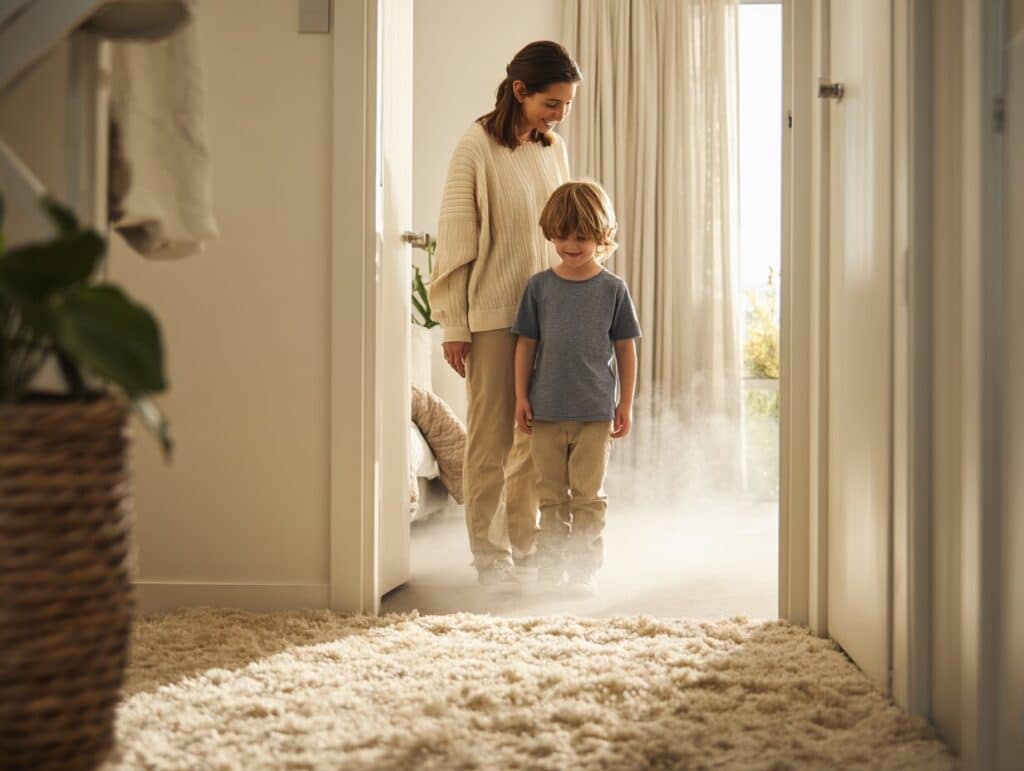
This is a question we’re asked on almost every job. It’s also one that genuinely matters — walking on damp carpet too soon is one of the most common ways people inadvertently undo good cleaning results.
Here’s the straightforward answer: wait at least 2–4 hours before walking on the carpet, and aim for 6–8 hours wherever possible. For optimal results, 24 hours is ideal — though we understand that’s not always practical in a busy home.
Here’s why it matters, and what you should do during and after the waiting period.
Why the Waiting Period Matters
Freshly cleaned carpet is more vulnerable than you might expect. The fibres are saturated with water, the pile is lying flat, and the surface has none of the protective soil layer that normally cushions wear. This vulnerable state has a few practical implications:
Soiling. Wet carpet fibres have an electrostatic quality that attracts and holds soil more effectively than dry fibres. Walking on damp carpet — even with socks — introduces soil from the soles of your feet and from the floor surface if you’ve walked elsewhere first.
Fibre distortion. In plush and cut-pile carpets especially, foot pressure on wet fibres can permanently flatten the pile in footfall patterns. This is the carpet equivalent of a wet-paper effect — the shape is set as the fibres dry.
Prolonged drying. Every footstep compresses moisture deeper into the pile, increasing the total drying time and creating conditions where bacteria and mould are more likely to develop.
Furniture marks. Heavy furniture placed on damp carpet can leave permanent indentations. The legs can also rust and transfer a red-brown stain to carpet fibres — particularly wire furniture legs or those with metal glides.
The Recommended Waiting Period
Minimum: 2 hours. After this period, you can walk on the carpet cautiously in clean, dry socks with minimal risk of soiling.
Recommended: 6–8 hours. This is the practical target for most homes. By this point, professionally cleaned carpet is typically dry or near-dry, and the risk of soiling and fibre damage is minimal.
Optimal: 24 hours. If your schedule allows — if the room can be closed off for a day — this eliminates virtually all risk and gives you the best long-term result from your clean.
With a dehumidifier and fans running: The waiting period can often be reduced. With good airflow and active dehumidification, professionally cleaned carpet may be fully dry in 2–4 hours.
A simple test: press your hand firmly onto the carpet pile. If it feels cool or damp to the touch, it’s not ready. When it feels warm or neutral and the fibres spring back cleanly, the carpet is dry.
Socks, Shoes, or Bare Feet?
The hierarchy, from safest to least safe, is:
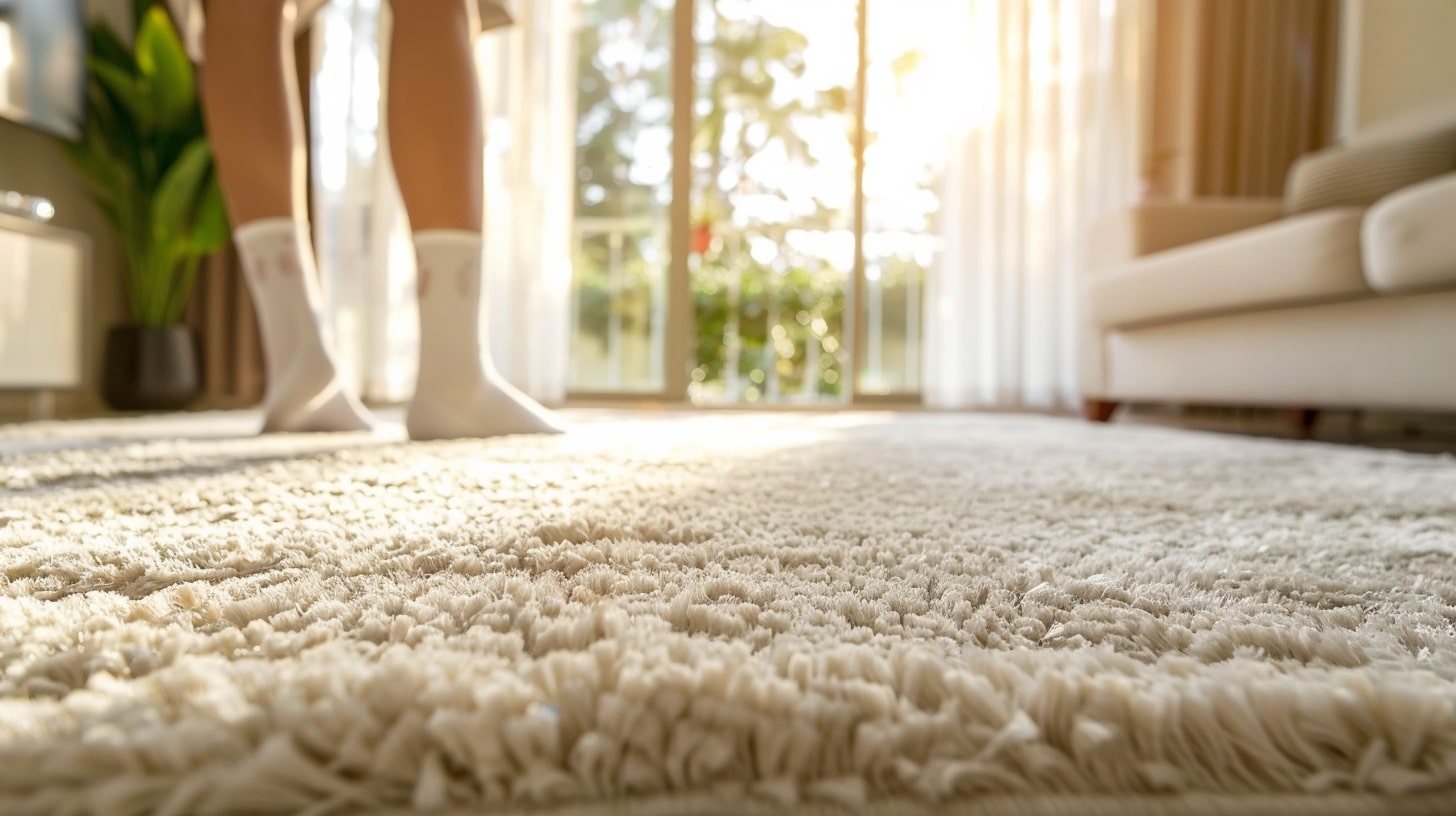
Clean, dry socks: safest. Socks distribute your weight more evenly than shoes and don’t concentrate pressure on individual fibres. Clean socks (not socks you’ve worn outside) won’t introduce external soil.
Bare feet: less ideal. Bare feet transfer natural body oils and skin cells directly to the carpet fibres. On a freshly cleaned carpet, these oils can attract soil. It’s not a disaster, but it’s not ideal in the first 6–8 hours.
Shoes: avoid. Shoes — even clean indoor shoes — concentrate weight at hard points (heels, balls of feet), accelerate fibre flattening, and carry residual soil from other surfaces. Keep shoes off until the carpet is fully dry.
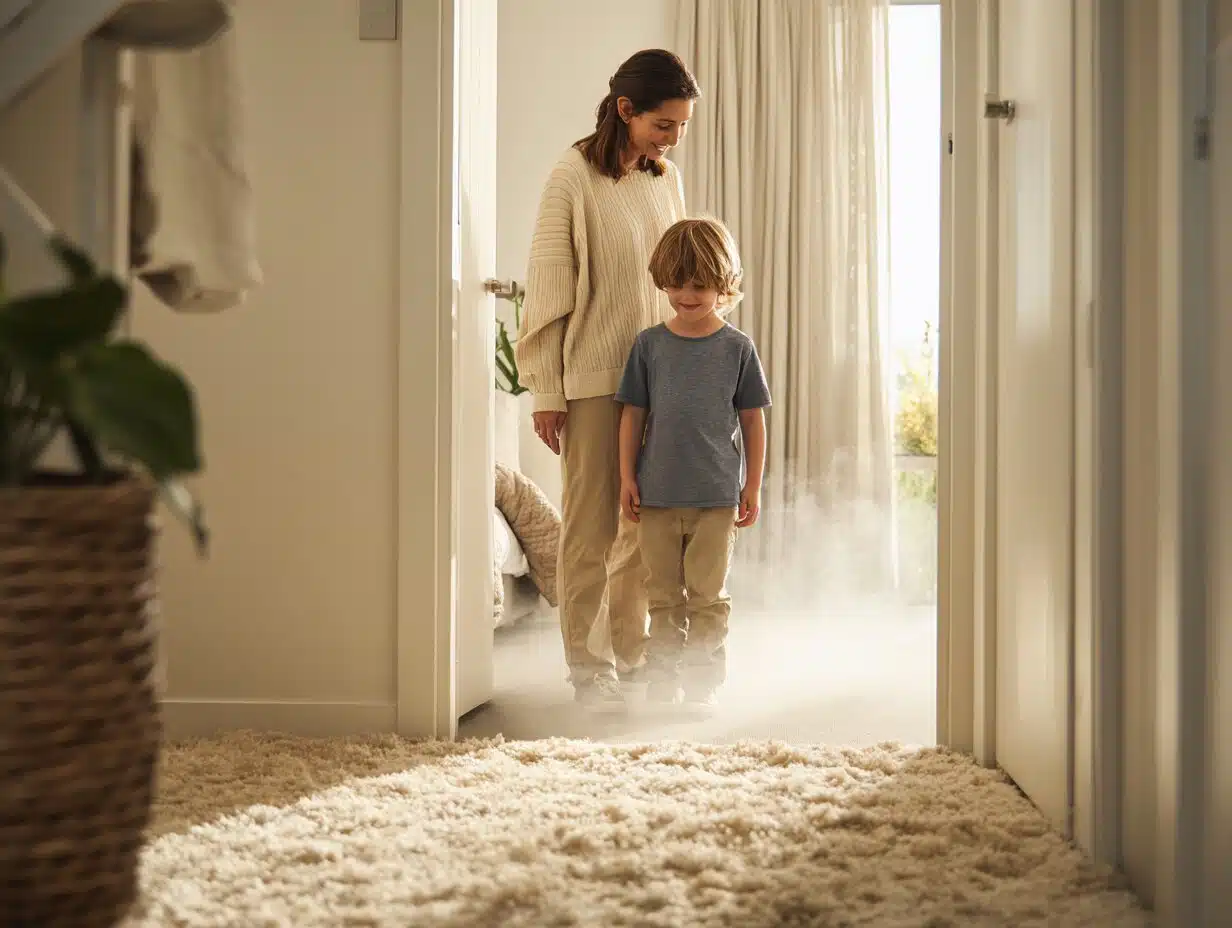
Children and pets: Small children who can’t keep shoes off should be kept out of the cleaned area if possible, or placed in socks. Pets should be kept off the carpet until it’s completely dry — particularly dogs with wet or muddy paws, obviously, but also cats whose claws can snag distorted wet fibres.
When to Put Furniture Back
As a general rule, furniture should go back onto a fully dry carpet — not a slightly damp one.
If you need to replace furniture sooner:
- Place protective squares of plastic, foam, or cardboard between furniture legs and the carpet to prevent rust transfer and indentations
- Avoid dragging furniture across the carpet — lift and place
- Don’t place extremely heavy pieces (bookshelves, heavy sofas) until the carpet is fully dry
Protecting your carpet from furniture marks long-term:
Consider using furniture coasters or felt pads under heavy furniture legs permanently — these prevent the pressure marks that develop over years of static load, not just post-cleaning.
Aftercare Tips to Extend Your Clean
Getting your carpets professionally cleaned is an investment, and a few simple habits will extend the results significantly:
Vacuum regularly after cleaning. Wait until the carpet is completely dry before vacuuming (usually 24 hours). Then vacuum regularly — once or twice a week in high-traffic areas — to prevent soil build-up.
Address spills immediately. Fresh spills on a just-cleaned carpet are actually easier to blot up than those on a heavily soiled one. Blot immediately with clean cloth; don’t rub.
Use door mats at entrances. A significant proportion of soil enters on footwear. Good door mats at all external entry points catch a large amount of this before it reaches the carpet.
Remove shoes at the door. Even more effective than mats. The habit of removing shoes at the door is one of the single most impactful things you can do for carpet longevity.
Book professional cleaning regularly. For most Melbourne households, once a year is a good rhythm. High-traffic homes or those with pets and children benefit from every 6–9 months. Regular cleaning means lighter cleaning — less soiling to remove, less water required, faster drying.
What If the Carpet Smells After Cleaning?
A mild, clean smell immediately after cleaning is completely normal — it’s the cleaning solution dispersing. This should dissipate within a few hours as the carpet dries.
A musty or mildew smell developing after cleaning, on the other hand, indicates that the carpet was not fully dried. This usually occurs when:
- Ventilation was insufficient
- Furniture was replaced too soon
- The room was closed up during drying
- A hire machine was used and left more moisture in the carpet than a professional unit would
If a musty smell develops after a professional clean by our team, call us. It shouldn’t happen, and we’ll come back and address it at no cost. We stand by our work.
Rental Properties: Special Considerations After Steam Cleaning
If you’re a renter having carpets cleaned at the end of a tenancy, or a landlord managing a carpet clean between tenants, a few additional points are worth knowing.
Timing in rental transitions. End-of-lease carpet cleans ideally happen 1–2 days before the final inspection, not on the same day. This gives the carpet adequate time to dry completely and ensures it presents at its best for the inspection.
Documentation. If you’re having carpets professionally cleaned for a rental bond return, ask for a receipt and an IICRC-certified cleaning certificate. Many landlords and property managers require documentation of professional cleaning, and a certificate from a certified company strengthens your position.
Pet-related cleaning. If the tenancy involved pets, professional pet odour treatment (not just a standard steam clean) may be required. It’s worth discussing this with the cleaning company in advance — and with the property manager to understand their expectations.
Carpet condition disputes. If a landlord is disputing whether carpet stains are fair wear and tear or damage, professional assessment and documentation from an IICRC-certified technician can provide objective evidence. We provide written condition assessments on request.
Caring for Your Carpet in the Days After Cleaning
The 24–72 hours after a professional carpet clean are a window of opportunity. The fibres are refreshed, the surface is clear of soil, and with a few simple habits you can extend the quality of that clean significantly.
Vacuum after 24 hours. Once the carpet is fully dry, a thorough vacuum picks up any surface residue and lifts the pile back to its natural state after the compression of cleaning and drying.
Spot-treat anything you notice immediately. A freshly cleaned carpet will reveal any remaining marks clearly. If you notice a spot that wasn’t fully removed, treat it promptly — it’s much easier to address at this stage than after the carpet has been in use for another few months.
Reapply furniture coasters. When replacing furniture, use felt or foam coasters under all legs. The cleaned carpet fibre is more susceptible to indentation marks in the first few days.
Communicate with your household. Let everyone know the carpet was just cleaned and ask them to remove shoes and avoid walking on it barefoot for the first day. Even children and teenagers typically understand and cooperate for a day if asked.
Take a photo. After the carpet is fully dry, take a photo of the cleaned result. It’s useful as a reference if you want to compare condition over time, or for rental documentation purposes.
Book Your Next Clean
The Squeaky Clean Team has been caring for Melbourne carpets since 2007. We’ll give you clear aftercare instructions specific to your carpet type when we finish the job, and we’re always available to answer questions.
Book at squeakycleanteam.com.au or call 1300 682 563. Same-week appointments available across Melbourne suburbs.