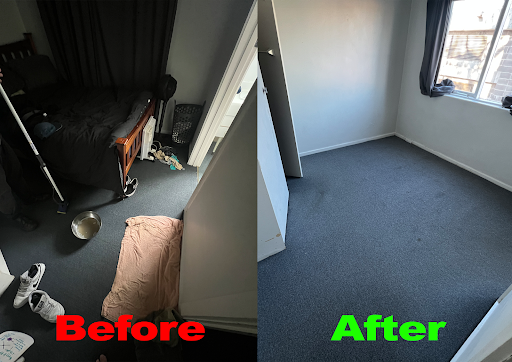
When your carpet is soaked, waterlogged or saturated, every minute counts...
5,000+ Melbourne properties restored — every single one still mould-free
5,000+ Melbourne properties restored — every single one still mould-free


Since 2007 we’ve completed more than 5,000 emergency water extractions, from single bedroom apartments flooded by burst pipes to multi-floor commercial buildings.
IICRC certified, truck-mounted extraction equipment, thermal imaging on every job.
Not every wet carpet needs replacing — but the type of water event usually decides how quickly you need to act. If any of the following have happened, it’s worth calling us straight away:
The sooner the water’s out, the better your chances of saving the carpet, underlay and flooring underneath — and the lower the risk of mould, bacteria or odour setting in.
Our technicians use moisture meters and thermal imaging to identify all affected areas, including hidden moisture pockets in underlay and subfloors.
Using powerful truck-mounted or portable extraction units, we remove 95% of water from your carpets and underlay — far more effective than shop vacuums or rental equipment. Our industrial extraction equipment removes up to 85% more water than consumer-grade wet vacuums, dramatically reducing drying time and significantly lowering your risk of mould growth.
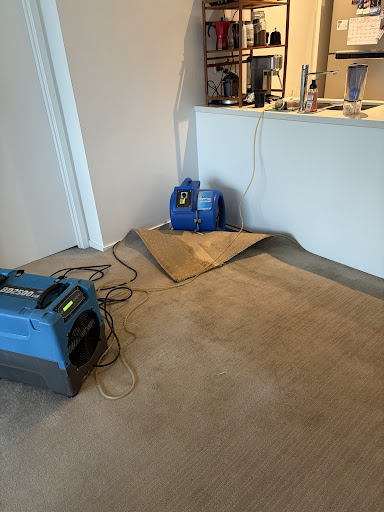
We implement the specialised “float drying” technique where appropriate, lifting the carpet to dry the underlay and subfloor directly, rather than drying from the surface only. This requires carpet laying skill most restoration companies don’t have in-house, which is why it’s rarely offered even though it’s the faster, more thorough method. Carpet is typically dry within 48 hours as a result.
Our commercial grade dehumidifiers remove moisture from the air, preventing it from reabsorbing into carpets and minimising humidity that promotes mould growth.
We apply professional grade antimicrobial treatments to prevent mould and bacteria growth, then verify complete drying with moisture meters before finalising the job.
If it’s safe to do so, a few quick steps before we get there can help limit the damage:
Not sure what to do? Call us and we’ll talk you through it while we’re on our way.