Finding a bald patch in your carpet can be a horrible surprise.
Perhaps you’ve moved a sofa that hasn’t shifted for years and discovered a bare patch underneath. Maybe a favourite wool rug suddenly has several little holes. Or perhaps you’ve spotted a tiny, hairy-looking grub near the skirting board and started wondering what else might be hiding in your carpet.
Your first thought might be that the carpet has simply worn out.
But if the damage is in a dark, quiet area — particularly if you have wool carpet — carpet beetles may be responsible.
We’ve been professionally cleaning carpets, rugs and upholstered furniture across Melbourne for more than 18 years, and carpet beetle damage is something we’re increasingly asked about.
The good news is that the infestation can be treated.
The honest bit is that carpet fibres that have already been eaten can’t be brought back with cleaning. If there’s an actual hole or bald patch, professional cleaning won’t magically regrow the wool.
What we can do is help you approach the problem in the right order.
And that order matters.
For an established carpet beetle problem, our recommended approach is to professionally clean the carpet first, have a licensed pest controller treat the infestation, allow the treatment time to work, and then professionally steam clean the carpet again — usually at around the four-week mark, subject to your pest controller’s instructions.
That gives the cleaning and pest-control processes separate jobs rather than expecting one to do everything.
Let’s look at why.
Found a Bald Patch in Your Carpet? Start Here
Don’t panic — and don’t immediately reach for the strongest insect spray you can find at the hardware store.
First, take a closer look.
Carpet beetle larvae favour areas where they’re relatively undisturbed. That means damage can remain hidden underneath furniture, around carpet edges, inside wardrobes and in other quiet parts of a home.
In fact, it’s quite common for people to discover a problem only when they move a piece of furniture.
Look for:
- Irregular bald or thinning areas in carpet
- Holes in wool rugs
- Tiny hairy or bristly larvae
- Shed larval skins
- Damage along carpet edges
- Damage underneath furniture
- Small adult beetles around windows
- Damage to woollen clothing or other natural fibres
One adult beetle on a windowsill doesn’t automatically mean your carpet is being eaten.
However, an adult beetle combined with unexplained wool carpet damage, larvae or shed skins deserves further investigation.
What Are Carpet Beetles?
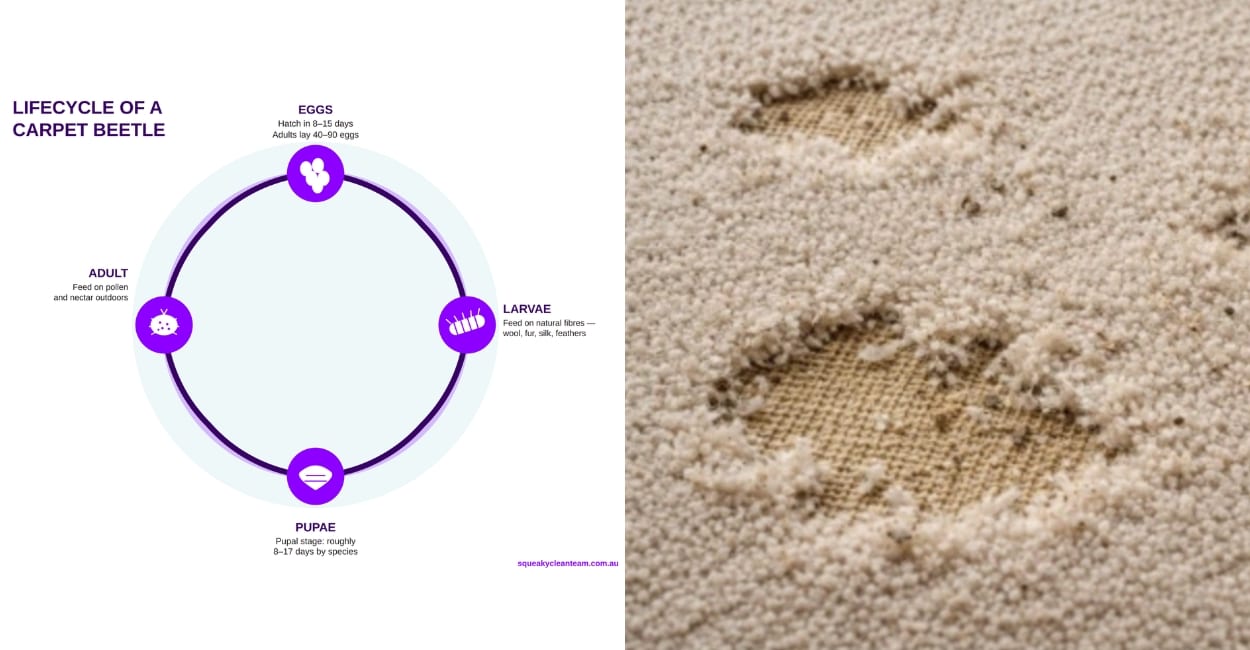
Carpet beetles are small insects belonging to the beetle family Dermestidae.
There are several species found in Australia. Depending on the species, the adult beetle may only be a few millimetres long.
That’s part of what makes them easy to overlook.
But there’s another important point:
The adult beetle isn’t usually the thing eating your carpet.
Adult Beetles Aren’t Usually Eating Your Carpet
Adult carpet beetles generally live very different lives from their larvae.
Adults are commonly associated with flowers, pollen and nectar and may enter homes from outside. Indoors, you may notice adult beetles around windows because they’re attracted towards light.
Unfortunately, the adult stage isn’t where most household damage occurs.
That happens earlier.
Carpet Beetle Larvae Cause the Damage
The larvae are the real carpet munchers.
They can feed on animal-derived natural materials and fibres, including:
- Wool
- Fur
- Feathers
- Hair
- Silk
- Natural-fibre furnishings
- Wool carpets
- Wool rugs
- Some upholstered furniture
This explains why carpet beetle larvae can be particularly bad news for a home with quality wool carpet.
They also tend to avoid light and favour dark, undisturbed areas.
A beautiful wool carpet underneath a heavy sofa can therefore provide exactly the sort of environment larvae like: a suitable food source in a place that isn’t disturbed very often.
By the time you move the sofa and discover the damage, they’ve potentially been there for quite some time.
7 Signs You May Have Carpet Beetles
There isn’t one single sign that proves carpet beetles are responsible.
However, several clues together can paint a fairly convincing picture.
1. Bald or Thinning Carpet
This is often the first thing homeowners notice.
Unlike ordinary wear from foot traffic, carpet beetle damage can appear in places where hardly anybody walks.
A bald patch underneath a sofa, along the edge of a room or inside a wardrobe therefore deserves attention.
2. Damage to Wool Rugs
Rugs can also be affected, particularly those containing wool or other animal-derived fibres.
Don’t just inspect the top.
Look underneath and around the edges as well.
3. Small Hairy Larvae
The larvae look quite different from the adult beetles.
They can appear brownish, hairy or bristly. Some are sometimes described as little “woolly bears”.
They’re small, so you’ll need to look carefully.
4. Shed Larval Skins
As carpet beetle larvae develop, they moult and leave their old skins behind.
These small, bristly casings can collect around carpet edges, underneath furniture and in other quiet areas.
They’re an important clue.
5. Adult Beetles Around Windows
Adult carpet beetles may be found on windowsills as they move towards natural light.
Again, one beetle doesn’t prove that you have an infestation.
But it’s another piece of the puzzle.
6. Damage in Dark, Undisturbed Places
Move the sofa.
Check underneath beds.
Look inside wardrobes and around carpet edges.
These areas can tell you much more than the middle of a living room that gets vacuumed twice a week.
7. Damage to Other Natural-Fibre Items
Don’t stop at the carpet.
Check woollen clothes, blankets, rugs and other natural-fibre furnishings.
If you’re finding unexplained damage in several places, it’s time to investigate further.
Where Should You Look for Carpet Beetles?
Start with the places you don’t normally clean every week.
| Area | What to look for |
| Under sofas | Larvae, shed skins and carpet damage |
| Under beds | Damage and accumulated hair or lint |
| Carpet edges | Thinning, larvae and shed skins |
| Wardrobes | Carpet and woollen clothing damage |
| Under rugs | Hidden fibre damage |
| Skirting boards | Larvae and debris |
| Windowsills | Adult beetles |
| Pet sleeping areas | Accumulated hair and natural fibres |
| Stored blankets | Holes or larvae |
| Quiet spare rooms | Undisturbed carpet damage |
You don’t need to pull the whole house apart.
The aim is to determine whether the bald patch you’ve found is an isolated problem or part of wider activity.
Why Wool Carpet Is Particularly Vulnerable
Wool is a wonderful carpet fibre.
It’s warm, resilient, comfortable underfoot and can last for many years when properly cared for.
Unfortunately, being a natural animal fibre also makes it attractive to certain textile pests.
Carpet beetle larvae can feed on materials containing keratin. Wool therefore provides a food source that purely synthetic carpet fibres don’t provide in the same way.
This doesn’t mean choosing wool carpet was a mistake.
Far from it.
It simply means that regular vacuuming, good housekeeping and professional maintenance become particularly important when you’ve invested in quality wool carpet.
Can Carpet Beetles Damage Synthetic Carpet?
This is more complicated than a simple yes or no.
Synthetic carpet fibres aren’t the same food source as wool. However, carpets collect other material.
Think about what gradually disappears into carpet pile:
- Pet hair
- Human hair
- Skin flakes
- Food particles
- Lint
- Dead insects
- Dust and other organic debris
Some of this can provide food sources even when the actual carpet fibre isn’t attractive to the larvae.
So, don’t dismiss insect activity simply because your carpet is synthetic.
The better question is: what is attracting them to that particular area?
Carpet Beetles or Clothes Moths?
This is where identification becomes particularly important.
Carpet beetles aren’t the only pests that can damage wool carpet, rugs and textiles.
Clothes moth larvae can cause similar damage.
And just like carpet beetles, it’s the larval stage that’s doing the chewing.
Both can attack animal-derived natural fibres such as wool. Both can favour quieter parts of the home. And both can potentially leave you staring at damaged carpet wondering what on earth happened.
That’s why we don’t recommend choosing a treatment based solely on a photograph or a quick internet search.
Correct identification matters because the appropriate pest treatment depends on what you’ve actually got.
The Squeaky Clean Team is a professional carpet and upholstery cleaning company, not a pest-control business.
If there’s an active infestation, we recommend having the pest correctly identified by a licensed pest technician.
We can help with that too.
We work with pest-control professionals in Melbourne and can recommend pest control companies if you don’t already have someone you trust.
What Should You Do If You Find Carpet Beetle Damage?
The trick is to deal with the problem logically rather than throwing every cleaning product and insect spray in the cupboard at it.
Step 1: Don’t Assume What’s Causing the Damage
A bald patch doesn’t automatically mean carpet beetles.
There can be other causes, including clothes moths, physical damage and normal carpet wear.
Look for supporting evidence such as larvae, shed skins, adult beetles and damage to other natural fibres.
If you suspect an infestation, arrange professional identification.
Step 2: Vacuum Thoroughly
Give the affected room a very thorough vacuum.
And we mean thorough.
Don’t simply vacuum the visible traffic areas.
Pay particular attention to:
- Carpet edges
- Along skirting boards
- Under beds
- Under sofas
- Behind furniture
- Wardrobes
- Low-traffic corners
Move furniture where it’s practical and safe to do so.
When you’re finished, empty your vacuum outside into an external bin.
Regular, thorough vacuuming — including moving furniture and cleaning carpet edges — is also recommended as a preventative measure by Australian pest-management authorities.
Step 3: Check Other Natural Fibres
Don’t assume the carpet is the only potential food source.
Check:
- Wool rugs
- Woollen clothing
- Blankets
- Natural-fibre furnishings
- Stored textiles
- Pet bedding
- Areas where pet hair accumulates
You’re looking for either another source of activity or evidence that the infestation is more widespread than the original bald patch suggests.
Step 4: Arrange Professional Identification
If you find larvae, recurring adult beetles or unexplained damage, we’d recommend bringing in a licensed pest-control technician.
They can determine what you’re actually dealing with and recommend the appropriate treatment.
If you don’t have a pest controller, ask us.
We work alongside pest-control professionals in Melbourne and can recommend companies that can inspect and treat the property.
It also means we can help coordinate the carpet-cleaning side around the pest treatment.
And that brings us to one of the most important parts of this article.
The Fix That Actually Holds: Clean First, Treat, Then Clean Again
Getting rid of a carpet beetle problem isn’t simply a matter of steam cleaning the carpet or having a pest controller spray the house.
The order matters.
Our recommended approach is:
- Professionally steam clean the carpet first.
- Have the infestation treated by a licensed pest-control technician.
- Leave the treatment undisturbed for the period recommended by the pest controller.
- Professionally steam clean again — commonly around four weeks later, provided the pest controller confirms it’s appropriate.
Why twice?
Because the first and second carpet cleans have different jobs.
First: Professionally Steam Clean the Carpet
The initial professional clean prepares the carpet before pest treatment.
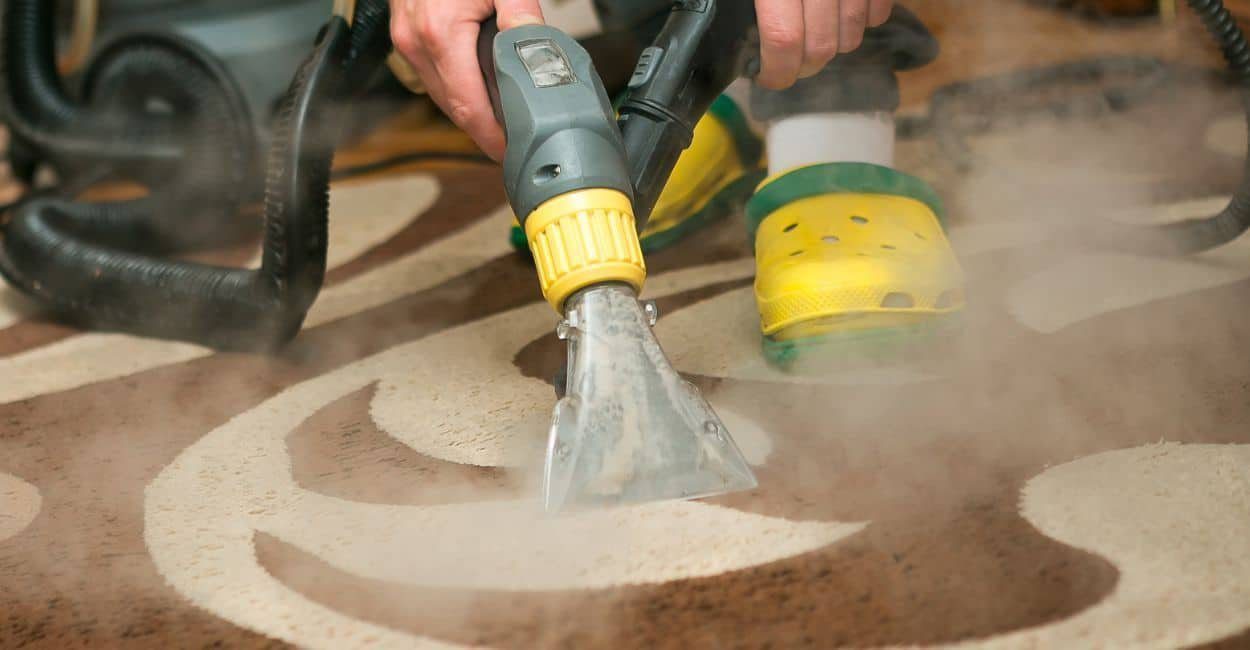
Hot water extraction helps remove material from within the accessible carpet pile, including:
- Hair
- Lint
- Soil
- Organic debris
- Shed larval skins
- Loose larvae
- Insect debris
It also removes accumulated material that carpet beetle larvae may be feeding on.
At The Squeaky Clean Team, we use professional hot water extraction equipment and select the appropriate equipment for the carpet, property and access.
Our truck-mounted systems are particularly effective where access allows because they provide powerful extraction and sustained heat.
However, there’s an important distinction:
Steam cleaning isn’t a substitute for pest control.
We can thoroughly clean the carpet, but we can’t treat insects or eggs hidden inside wall cavities, behind skirting boards or in other structural areas that carpet-cleaning equipment can’t reach.
That’s the pest controller’s job.
Second: Have a Licensed Pest Controller Treat the Property
Once the carpet has been professionally cleaned and is properly dry, the licensed pest technician can carry out the appropriate treatment.
The pest controller should determine what insect you’re dealing with and where treatment needs to be applied.
Depending on their assessment, that may include carpet edges, skirting boards, cupboards, cracks and other places where larvae or eggs may be present.
Don’t have a pest controller? We can recommend one.
We work with pest-control professionals in Melbourne and can help you coordinate the two services so they happen in the right order.
Third: Give the Pest Treatment Time to Work
This part is important.
Don’t have the carpet steam cleaned again immediately after pest treatment.
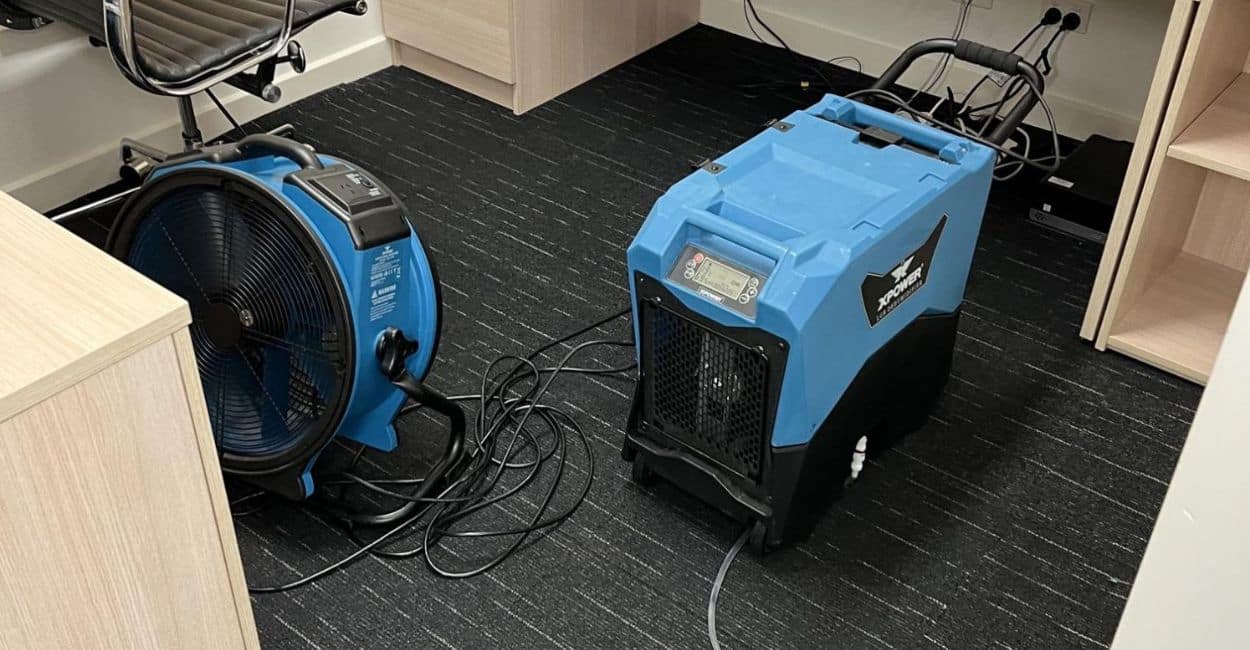
Many professional pest treatments rely on residual products remaining in place for a period after application.
Cleaning too soon may remove or interfere with that treatment.
There can also be eggs or larvae hidden in places that couldn’t be reached during the first carpet clean. The residual pest treatment needs time to deal with continuing insect activity.
Your pest technician will tell you how long the particular treatment needs to remain undisturbed and when normal vacuuming or wet cleaning can resume.
Always follow their instructions because pest-control products and treatment plans vary.
Fourth: Steam Clean Again After About Four Weeks
Once the pest controller confirms the treatment has had sufficient time to work, we recommend another professional carpet steam clean.
Around four weeks is a useful general guide, but your pest controller’s instructions take priority.
Why clean again?
Because during the treatment period there may have been continued activity as the infestation was brought under control.
The final hot water extraction clean helps remove accessible material left within the carpet pile, including:
- Dead carpet beetles
- Dead larvae
- Shed larval skins
- Insect debris
- Hair and lint
- General accumulated soil
- Any remaining loose larvae or insects within areas reached by the cleaning process
It also gives your carpet a proper final clean after what can be a pretty unpleasant experience.
Clean First. Treat. Then Clean Again.
Here’s the whole process at a glance:
| Stage | Purpose |
| Professional steam clean | Thoroughly cleans the carpet and removes accessible debris, food sources, loose larvae and shed skins |
| Licensed pest treatment | Treats the infestation and areas carpet cleaning can’t reach |
| Wait for treatment to work | Allows the residual treatment time to deal with ongoing insect activity |
| Steam clean again at around 4 weeks | Removes accessible dead insects, larvae, shed skins and debris and gives the carpet a thorough final clean |
That’s why we describe it as:
Clean first. Treat. Then clean again.
Each service is doing a different job.
Can Carpet Beetle-Damaged Carpet Be Saved?
It depends on how much damage has already occurred.
There are really two separate questions.
Is the carpet dirty and affected by insect debris?
And:
Have the actual carpet fibres been eaten away?
Professional carpet cleaning can help enormously with the first.
Unfortunately, it can’t reverse the second.
If carpet beetle larvae have physically eaten away wool fibres and created a bald patch or hole, those fibres are gone.
Steam cleaning can’t make them grow back.
We’d rather tell you that upfront than promise a result that cleaning simply can’t deliver.
When Professional Cleaning Helps
Professional hot water extraction can remove:
- General soil
- Hair
- Lint
- Insect debris
- Shed skins
- Loose material within the carpet pile
It can also leave the remaining carpet properly clean once the infestation has been dealt with.
When Repair or Replacement May Be Needed
Small areas of physical damage may sometimes be suitable for carpet repair, depending on the location, carpet and availability of matching material.
More extensive damage may mean replacement is the sensible option.
Again, we’ll be straightforward about it.
Our 110% Care Factor isn’t about selling you the biggest possible job. It’s about looking after your carpet and giving you an honest assessment of what it needs.
How to Help Stop Carpet Beetles Coming Back
Unfortunately, dealing with the current infestation isn’t the end of the story.
Adult carpet beetles can enter homes again, so prevention matters.
Fortunately, most of the preventative steps are pretty straightforward.
Vacuum Regularly — Including the Places You Can’t See
Regular vacuuming is one of your best habits.
But don’t just vacuum the middle of the room.
Pay particular attention to:
- Skirting boards
- Carpet edges
- Under beds
- Under accessible furniture
- Wardrobes
- Quiet corners
Every so often, move furniture that can safely be moved and vacuum underneath it.
Keep Hair and Lint Under Control
This is particularly important if you have pets.
Pet hair can accumulate quickly under furniture and around skirting boards.
Regularly vacuum pet areas and wash suitable pet bedding.
Inspect Woollen Items
Every so often, check stored woollen clothing, blankets and other natural-fibre items.
Bringing them out, inspecting them and disturbing those quiet storage areas can help you notice a problem earlier.
Check Windows and Flyscreens
Adult carpet beetles live largely outdoors and can make their way inside.
Check damaged flyscreens and obvious gaps around windows and doors.
You won’t make your home completely beetle-proof, but reducing easy entry points makes sense.
Professionally Clean Wool Carpet
Professional carpet cleaning isn’t a pest-control treatment.
However, it does help remove the soil, hair, lint and other material that gradually builds up beyond what ordinary household vacuuming can remove.
If you’ve invested in quality wool carpet, regular professional cleaning is worthwhile maintenance regardless of whether you’ve ever had carpet beetles.
Why Carpet Beetles Can Be Easy to Miss in Melbourne Homes
Carpet beetles aren’t a sign that your home is dirty.
That’s worth saying because people sometimes feel surprisingly embarrassed when they discover them.
There’s really no need.
Australian carpet beetles are found throughout Australia, and their larvae naturally seek out dark, undisturbed areas. They may remain hidden underneath furniture, along carpet edges and in other protected locations for a considerable time before anybody notices them.
That can make Melbourne homes with wool carpet, wool rugs and natural-fibre furnishings suitable environments if beetles find their way inside.
We work in all sorts of Melbourne properties — older period homes, newly renovated houses, apartments, rental properties and commercial premises.
Carpet beetles don’t care whether the carpet is old or whether you spent a small fortune having beautiful new wool carpet installed.
If there’s a suitable food source and somewhere quiet for the larvae to feed, a problem can develop.
Finding carpet beetles doesn’t mean you’ve neglected your home.
It means you’ve found a pest problem that now needs to be dealt with properly.
Frequently Asked Questions About Carpet Beetles
1. What causes bald patches in wool carpet?
Several things can cause carpet damage, including normal wear, physical damage and textile pests.
Carpet beetle larvae and clothes moth larvae can both damage wool fibres.
If a bald patch appears in a low-traffic location — particularly underneath furniture or along a carpet edge — check for larvae, shed skins and other signs of insect activity.
2. How do I know if I have carpet beetles?
Common signs include small hairy larvae, shed larval skins, irregular damage to wool carpet or rugs and adult beetles appearing around windows.
However, carpet beetles aren’t the only insects that damage natural fibres.
If you suspect an active infestation, professional identification is worthwhile.
3. Will vacuuming get rid of carpet beetles?
Vacuuming helps and should be done thoroughly.
It removes debris, potential food sources and some insects or larvae within the areas you can reach.
However, it can’t reliably reach every egg or larva hidden around skirting boards, underneath fixed structures or elsewhere within the property.
For an established infestation, we recommend professional pest identification and treatment.
4. Does carpet steam cleaning kill carpet beetles?
Professional hot water extraction can remove accessible larvae, insects, shed skins and debris from the carpet and plays an important role in the overall process.
However, we wouldn’t sell carpet steam cleaning as a stand-alone treatment for an established carpet beetle infestation.
Cleaning equipment can’t treat insects hidden inside wall cavities, structural gaps and other areas away from the carpet.
That’s why we recommend combining professional cleaning with licensed pest control.
5. Should I steam clean before or after carpet beetle pest treatment?
Both — but at different stages.
Our recommended sequence is:
Steam clean first → professional pest treatment → allow the treatment to work → steam clean again at around four weeks, subject to your pest controller’s instructions.
The first clean removes accessible debris, larvae, shed skins and food sources before treatment.
The second clean helps remove accessible dead insects, larvae, shed skins and debris after the pest treatment has been given time to work.
6. Why wait around four weeks before cleaning again?
A professional pest treatment may need to remain undisturbed so that residual products can continue working on insect activity after the initial treatment.
Steam cleaning immediately afterwards could interfere with that process.
Around four weeks is a useful general guide for the follow-up clean, but always ask your pest technician first. The correct waiting period depends on the product and treatment they’ve used.
7. Can carpet beetles permanently damage wool carpet?
Yes.
Once larvae have physically eaten away carpet fibres, cleaning can’t restore those missing fibres.
A small damaged area may potentially be repaired. More extensive damage may require replacement.
The earlier an infestation is identified and treated, the better your chances of limiting further damage.
8. Are carpet beetles only found in dirty houses?
No.
Carpet beetles aren’t evidence of poor housekeeping.
Their larvae seek suitable food sources and quiet, protected places to feed.
Regular vacuuming and professional carpet maintenance can help reduce food sources and make these areas less inviting, but carpet beetles can still find their way into well-maintained homes.
9. Are carpet beetles and carpet moths the same thing?
No.
They’re different insects.
However, their larvae can both damage animal-derived natural fibres such as wool, which means the resulting carpet damage can sometimes look similar.
That’s why proper identification is important before treatment.
10. Can carpet beetles live in my couch?
Carpet beetle larvae aren’t limited to carpet.
Depending on the materials and available food sources, they can be associated with upholstered furniture and other natural-fibre household items.
If you’ve discovered activity around a sofa or upholstered chair, mention it to both your pest technician and upholstery cleaner.
11. Can you recommend a pest-control company in Melbourne?
Yes.
The Squeaky Clean Team doesn’t carry out pest-control treatments ourselves, but we work with pest-control professionals in Melbourne and can recommend pest control companies if you need help finding one.
We can also coordinate the timing of your carpet or upholstery cleaning around the treatment instructions provided by your pest technician.
Getting Your Carpet Back to Normal
Discovering a bald patch in your carpet is frustrating.
Discovering that something has actually been living in there and eating it isn’t exactly the news anybody wants either.
But the problem can be dealt with.
The key is recognising that carpet cleaning and pest control have different jobs.
A licensed pest-control professional should identify and treat the infestation.
Our job is to look after the carpet.
That’s why, where appropriate, we recommend the simple sequence we’ve covered throughout this article:
Clean first. Treat. Let the treatment work. Then clean again.
We can professionally steam clean the carpet before pest treatment, removing accessible debris, larvae, shed skins and accumulated material from within the carpet pile.
A licensed pest technician can then treat the actual infestation and the areas that carpet-cleaning equipment can’t reach.
Then, once they’ve confirmed the treatment has had enough time to work — often at around the four-week mark — we can return and thoroughly steam clean the carpet again.
That final clean helps remove accessible dead insects, larvae, shed skins and debris and gets the carpet feeling like part of your home again rather than something you’re slightly nervous about walking over.
And if you don’t already have a pest-control company, we can recommend Melbourne pest-control professionals and help you coordinate the process.
We’ve been professionally cleaning carpets, rugs and upholstery across Melbourne for more than 18 years.
We don’t promise that cleaning can repair fibres that have already been eaten.
We don’t pretend we’re pest controllers.
And we won’t sell you a carpet clean when another professional needs to deal with the underlying problem first.
What we will do is help you work out the right next step, professionally clean what can be cleaned and look after your carpet with the 110% Care Factor we’ve built our business around.
Think you may have carpet beetles?
Call The Squeaky Clean Team on 1300 682 563.
We’re happy to talk through what you’ve found, explain when the carpet should be cleaned and recommend a pest-control professional if you need one.
We provide professional carpet cleaning, rug cleaning and upholstery cleaning throughout South East Melbourne and the Mornington Peninsula.