After more than 50 years of combined experience cleaning Melbourne carpets, our team has seen the full spectrum of DIY cleaning attempts — the ones that worked out fine and the ones that turned a manageable problem into a permanent one.
Most carpet damage we see isn’t caused by wear or age. It’s caused by well-intentioned cleaning mistakes. Here are the ten most common ones, what they actually do to your carpet, and what to do instead.
Mistake 1: Rubbing and Scrubbing Stains
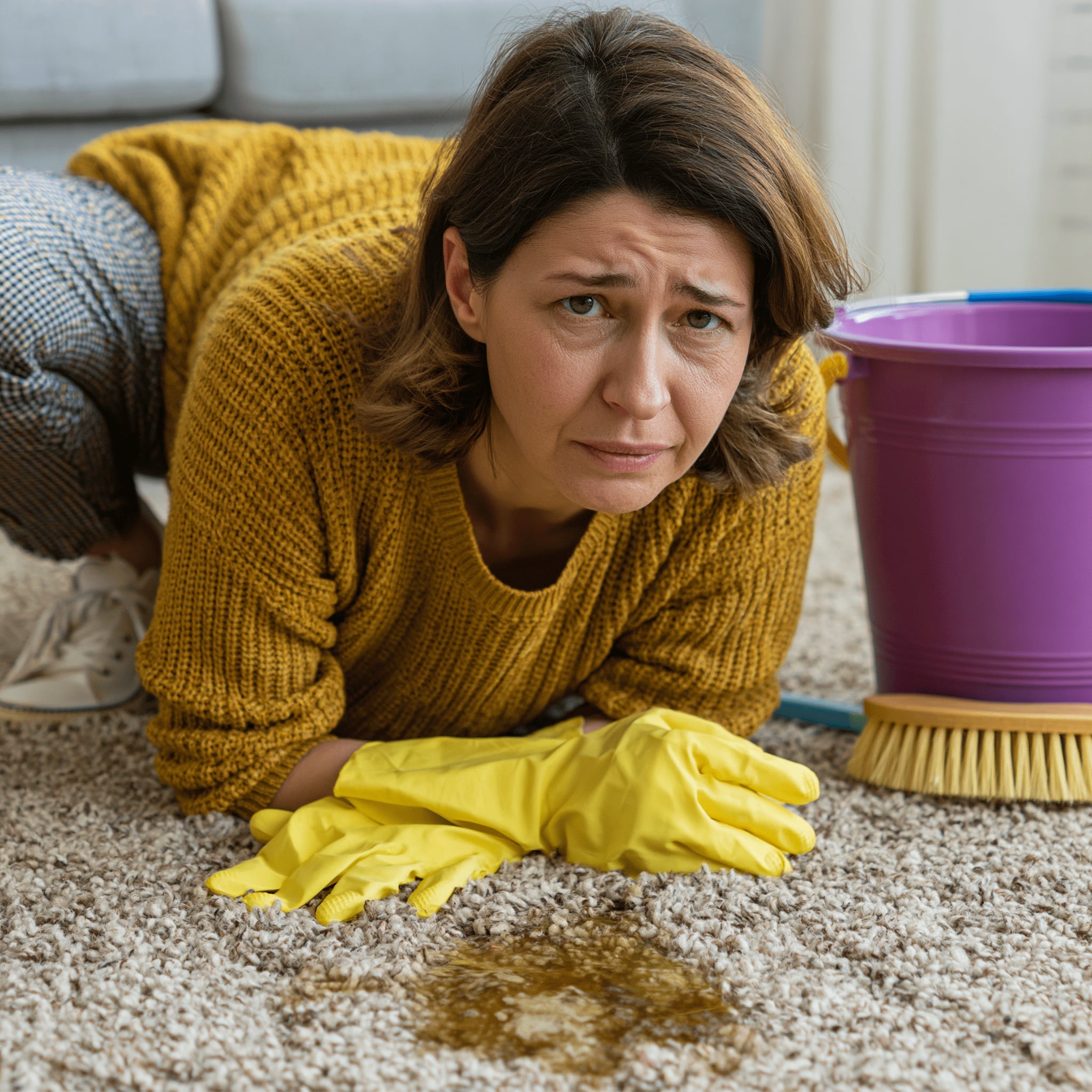
This is the most common and most damaging reflex when a spill happens. The instinct is to scrub — but scrubbing spreads the stain laterally, drives it deeper into the pile, and can distort or break carpet fibres, leaving a fuzzy, damaged patch long after the stain itself is gone.
What to do instead: Blot — always blot. Use a clean, dry cloth and press firmly onto the stain from the outside edge inward, lifting rather than rubbing. Replace the cloth as it absorbs liquid and repeat until no more transfers. Patience at this stage prevents permanent damage.
Mistake 2: Using Too Much Water
Over-wetting is probably the most widespread DIY cleaning error. Applying excess water — whether from a bucket, a spray bottle, or a hire machine — saturates the carpet backing and underlay. This leads to:
- Dramatically extended drying time (often 24 hours or more)
- Mould and bacterial growth in the underlay within 24–48 hours
- Wicking — where the dissolved stain migrates back to the surface as the carpet dries, reappearing days later
- Backing separation and shrinkage in some carpet types
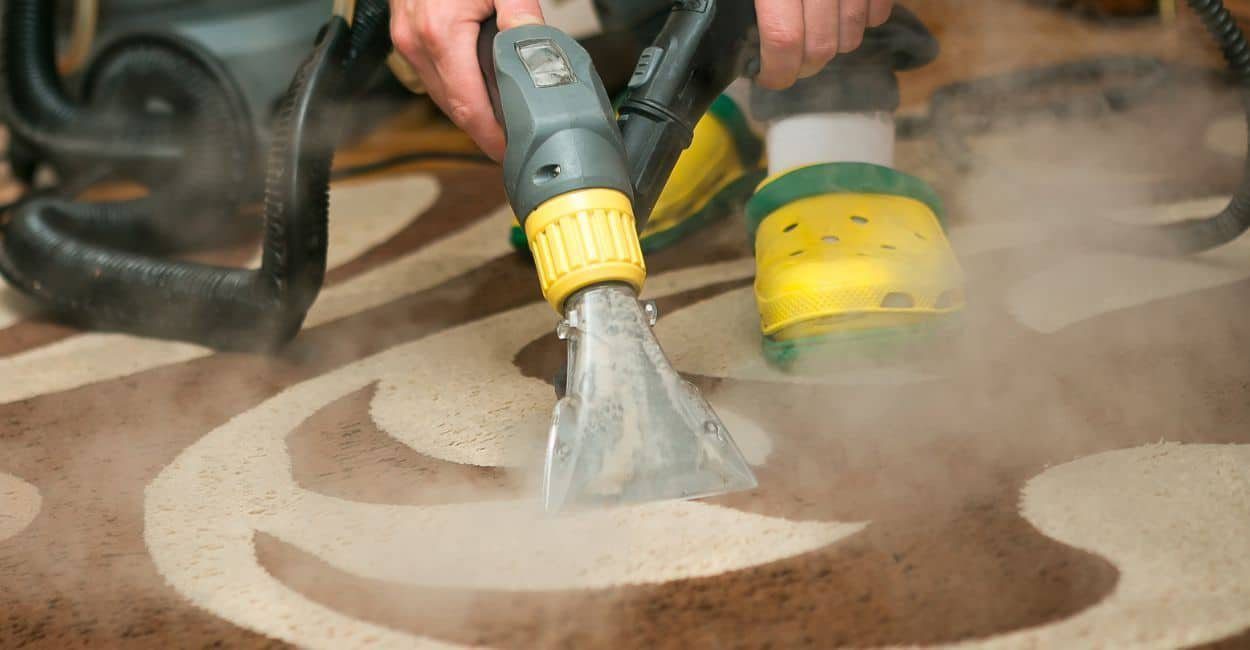
What to do instead: Use cleaning solutions sparingly. For spot cleaning, mist — don’t drench. For deeper cleaning, professional hot water extraction equipment extracts far more moisture than it injects, leaving carpet significantly drier than any hire machine or DIY method.
Mistake 3: Using Bicarbonate of Soda (Baking Soda) on Carpet
Baking soda is widely recommended online as a natural carpet deodoriser, and it does have some mild odour-absorbing properties in dry form. The problem is what happens when moisture is involved — and in carpet cleaning, moisture is almost always involved.
When bicarbonate of soda gets wet, it forms a paste that works its way deep into the carpet fibres and backing. It’s notoriously difficult to fully vacuum out, leaves a sticky, powdery residue that attracts and holds soil, and can cause the carpet to feel gritty and matted over time.
What to do instead: For odour, use an enzyme-based deodoriser specifically formulated for carpet. These break down the organic compounds causing the smell at a molecular level — without leaving any residue. For persistent odour, professional treatment is significantly more effective.
Mistake 4: Using the Wrong Cleaning Products
Not all carpet cleaning products are appropriate for all carpet types — and some of the most commonly used household cleaners cause direct damage:
- Bleach and chlorine-based cleaners: Strip carpet dyes, causing permanent discolouration that cannot be reversed.
- High-pH alkaline cleaners on wool: Wool is highly sensitive to alkaline chemistry. Strong alkaline cleaners cause the fibre to felt and shrink irreversibly.
- Generic all-purpose household sprays: Many contain solvents, fragrances, or surfactants that leave residue, attract more soil, or react badly with the carpet dye system.
- Oxygen whiteners: Often labelled as safe for fabrics, but can bleach coloured carpet fibres and damage natural fibre rugs.
What to do instead: Always check that a product is appropriate for your specific carpet type before applying it. When in doubt, test on an inconspicuous area and wait a few minutes. Better still, call us — we can recommend the right approach for your carpet type without any obligation.
Mistake 5: Not Testing Products Before Applying
Even products labelled as carpet-safe can cause colour bleeding, dye transfer, or fibre damage on certain carpet types or colours. Many people apply a product to a visible stain, see a problem develop, and then have no way to reverse it.
What to do instead: Always apply a small amount to a hidden area — a corner that sits under furniture, or a folded edge — and wait two to three minutes. Check for colour transfer to the cloth, colour change in the carpet, or any fibre reaction before treating the actual stain.
Mistake 6: Treating a Stain with Heat
Applying hot water, a warm iron, or steam directly to a stain is a surprisingly common mistake, often in an attempt to lift a stubborn mark. Heat sets many stain types — particularly proteins (blood, egg, dairy, pet urine) — by denaturing the compounds and bonding them permanently to the carpet fibres.
What to do instead: Always use cold water on fresh stains. Reserve heat-based methods for specific, expert applications — like the candle wax removal technique, which uses paper and a warm iron to transfer wax — and only when you’re confident of what you’re doing.
Mistake 7: Leaving Stains Too Long Before Treating Them
The longer a spill sits in carpet, the harder it becomes to remove. In the first few minutes after a spill, the liquid is still largely at the surface. After an hour, it has penetrated into the backing. After 24 hours, many spill types have begun to bond with the fibres and the underlay.
This is particularly important for pet accidents. Urine that isn’t treated immediately forms uric acid crystals as it dries — these bond to fibres and are activated by moisture, causing the odour to return long after you think the problem is solved.
What to do instead: Treat spills immediately. Keep supplies close at hand — a clean cloth and cold water are enough to begin effective treatment in the first critical minutes.
Mistake 8: Over-relying on Hire Machines
Carpet cleaning machines available for hire from supermarkets and hardware stores are a reasonable option for routine maintenance on robust, synthetic carpets. But they have significant limitations that lead to problems:
- They inject considerably more water than they extract — carpets often take 12–24 hours to dry, creating ideal mould conditions
- The cleaning solutions provided can leave residue in the fibres that actually attracts soil faster post-clean
- Without professional training, it’s easy to over-wet, apply the wrong pre-treatment, or miss embedded stains entirely
For high-value carpets, natural fibre rugs, or any carpet with significant staining or odour, professional cleaning delivers measurably better results with faster drying.
What to do instead: For light, routine maintenance cleaning of robust synthetic carpet, a hire machine used carefully can suffice. For anything more demanding, professional cleaning is the more cost-effective choice in the long run.
Mistake 9: Putting Furniture Back Too Soon
Replacing furniture on a damp carpet causes two problems: it slows drying by trapping moisture beneath the furniture, and metal furniture legs or castors can transfer rust stains onto the damp fibres — a stain type that is notoriously difficult to remove fully.
Heavy furniture placed on a damp carpet also creates permanent indentations in the pile that can’t always be reversed once the carpet dries.
What to do instead: Wait until the carpet is completely dry before replacing furniture. If you need to put pieces back sooner, place protective squares of cardboard, foam, or plastic between each leg and the carpet surface.
Mistake 10: Ignoring the Underlay
The carpet you see is only part of the system. Beneath it is an underlay that can hold significantly more moisture than the carpet itself, and which is more prone to mould growth because it’s less able to dry effectively.
Many DIY cleaning attempts address the visible carpet surface while leaving the underlay damp, contaminated, or in some cases mouldy. This is why odour problems persist after a clean, and why stains sometimes “come back” — the contamination in the underlay wicks back up through the carpet as it dries.
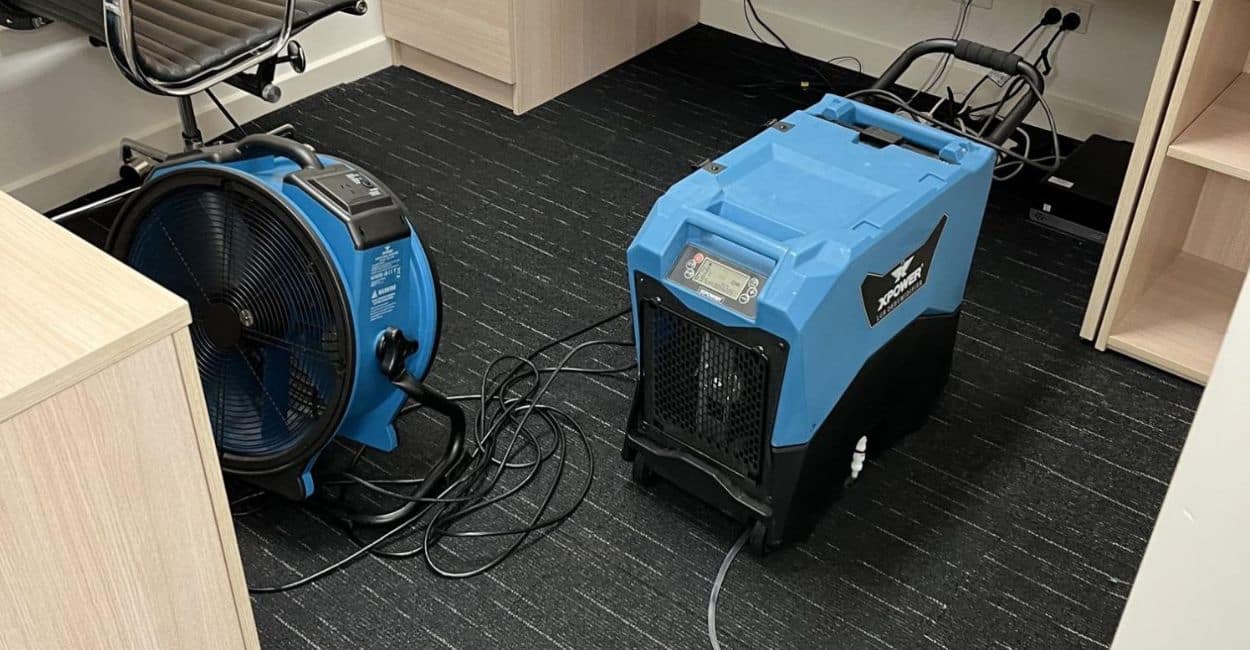
What to do instead: For any significant water event, pet accident, or deep soiling, ensure the underlay is assessed and addressed — not just the carpet surface. Professional cleaning with moisture metering checks the full system, not just what’s visible.
When in Doubt, Call a Professional
Most of the carpet damage we repair was avoidable. Not because the homeowner didn’t care — they clearly did, since they were trying to clean it — but because the wrong approach to a manageable problem turned it into a permanent one.
If you’re unsure about the best way to handle a stain, an odour, or a cleaning question, call us before you try anything. We’re happy to give honest advice over the phone, and in most cases it costs you nothing but a few minutes.
The Squeaky Clean Team: 1300 682 563 | squeakycleanteam.com.au. IICRC certified. Melbourne-wide service. 5,000+ properties cared for since 2007.